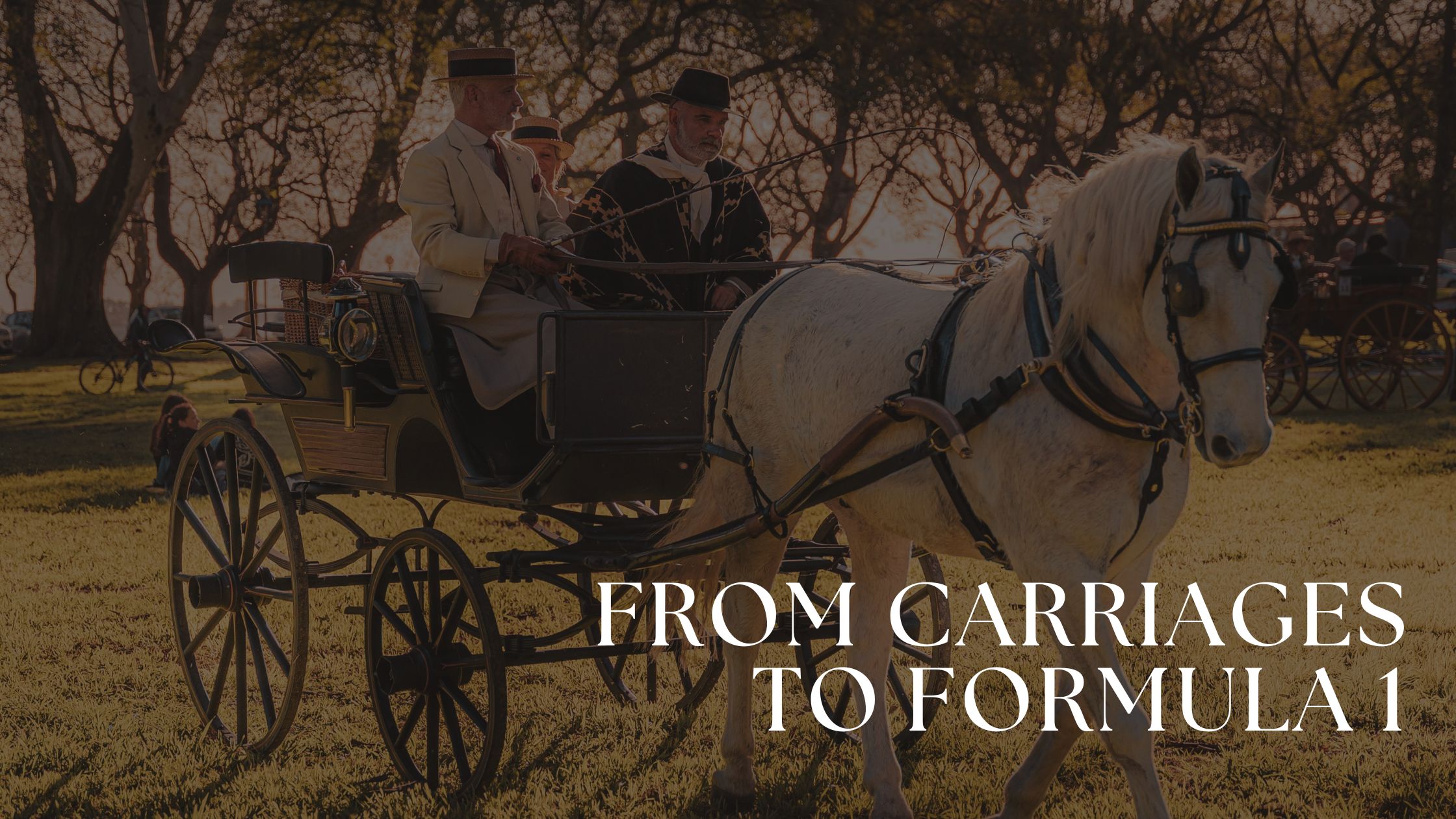
Most planners think about transportation as the part of the program that happens before the real experience starts. Buses, transfers, shuttle schedules — logistics to solve, not moments to design. However, that is a fairly recent way of thinking about movement. For most of history, how a group traveled together was never separate from the event itself. It was often the first act.
This is a short history of that idea — and of how, every few generations, someone has rediscovered that the journey is not just the way to the experience. It is part of it.
The carriage — movement as the opening act
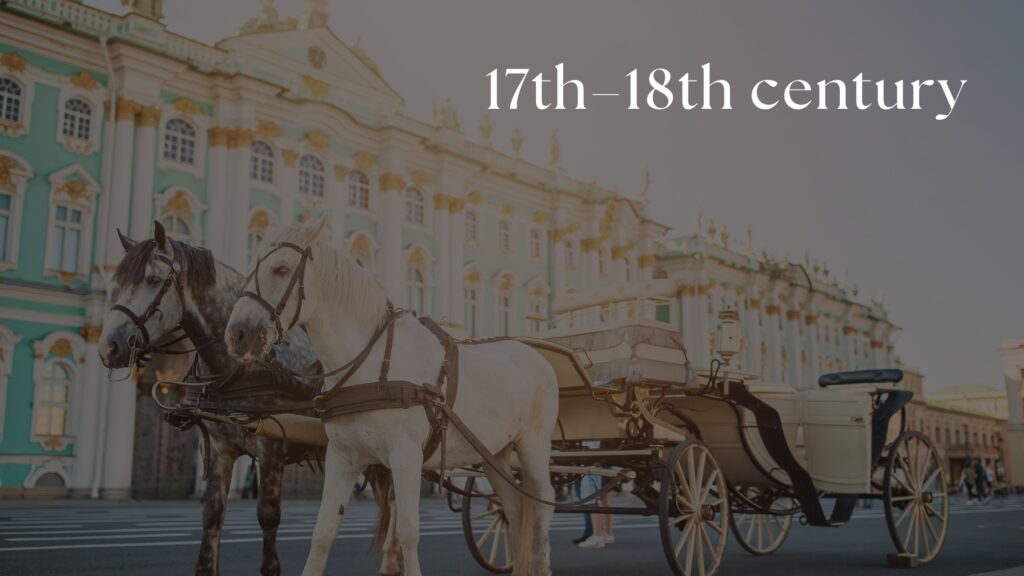
European courts of the 17th and 18th centuries understood something that modern event design often forgets: arrival is a performance, and performances need staging. At Versailles, the procession of carriages through the palace grounds was not incidental to court life — it was a deliberate display of hierarchy, wealth, and belonging. Who rode with whom, in what order, drawn by how many horses, said as much about status as anything that happened once guests stepped inside. The carriage itself, gilded and liveried, was the first signal a guest received about the magnitude of what they were about to attend.
In other words, the journey announced the event before the event began. Visitors did not simply arrive at Versailles; they were delivered into it, through a sequence designed to build anticipation. That principle — using the approach itself to set emotional tone — would resurface, in different forms, for the next three centuries.
The private railway car — selling the journey itself
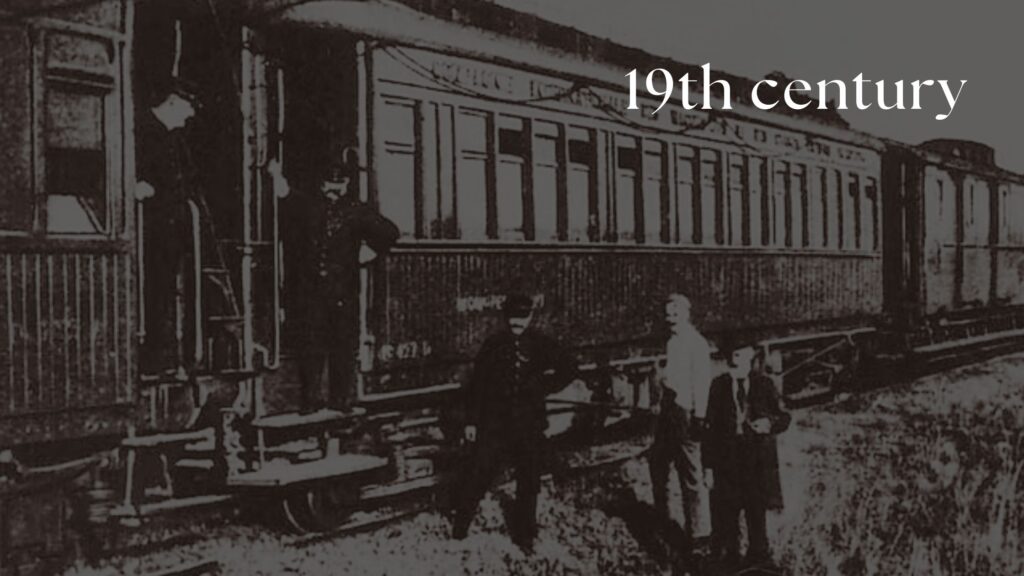
The 19th century introduced a genuinely new idea: that the trip could be the product, not merely the means of reaching one. American industrialists of the Gilded Age commissioned private railway cars outfitted with sleeping quarters, dining salons, and staff — moving offices and parlors that allowed business and pleasure to travel together across a continent. Meanwhile, in Europe, the launch of the Orient Express in 1883 made the same point with even more theatrical clarity: passengers were not paying primarily to get from Paris to Constantinople. They were paying for what happened between those two points.
This shift mattered enormously for what would eventually become the events industry. Once a journey could be marketed and sold on its own merits — once people would choose a slower, more expensive route specifically because of what the route itself offered — the door opened to thinking about transportation as an experience with its own narrative arc, rather than a gap to be minimized between two more important locations.
The Orient Express was only the beginning of that story. For a closer look at the luxury trains carrying that same idea into the present — from Africa’s Rovos Rail to Mexico’s El Chepe through the Copper Canyon — Global Luxury Trains: Journeys of Elegance and Discovery is one of our Snapshots, a quick-read inside MICE Destinations for moments between meetings.
Charter aviation and the yacht — exclusivity made portable
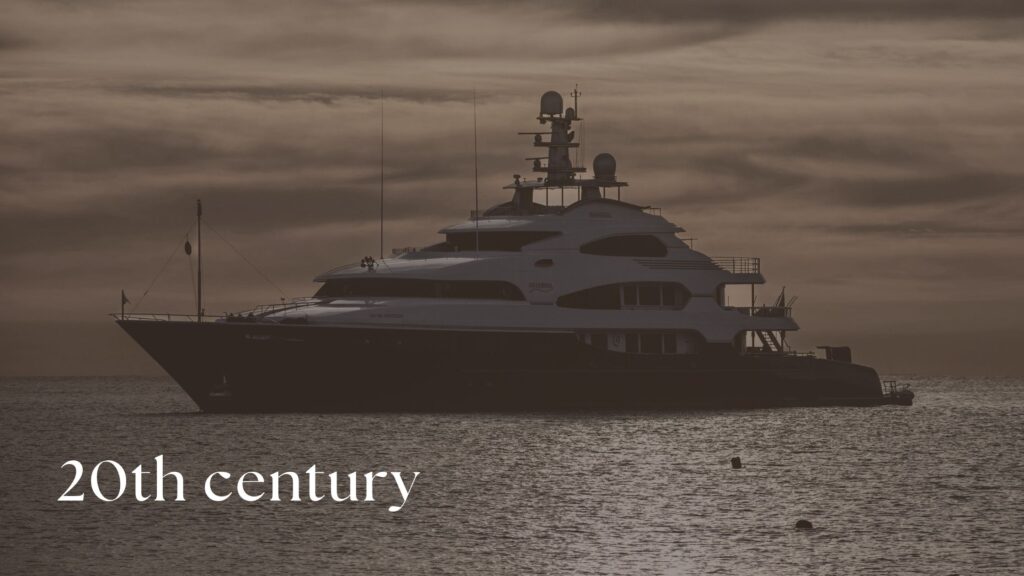
Commercial aviation, accelerating rapidly after the Second World War, eventually made distance itself a commodity — fast, replicable, and increasingly ordinary. Consequently, exclusivity had to find a new form. Private and charter aviation answered that need directly: a chartered aircraft converted travel time into something closer to a moving boardroom, private enough for sensitive conversations and flexible enough to bend an entire itinerary around a single executive group’s needs. Corporate yachting followed a parallel logic in maritime form, particularly around major sporting and cultural events, where a private vessel offered both transportation and a venue in one package.
What both modes shared was a quiet but important shift in purpose. The point was no longer simply arriving faster or more comfortably. It was arriving on terms entirely controlled by the host — which is, in essence, the same instinct that built the Versailles procession, expressed through twentieth-century technology instead of horses and gilt.
Formula 1 — when the movement becomes the main event
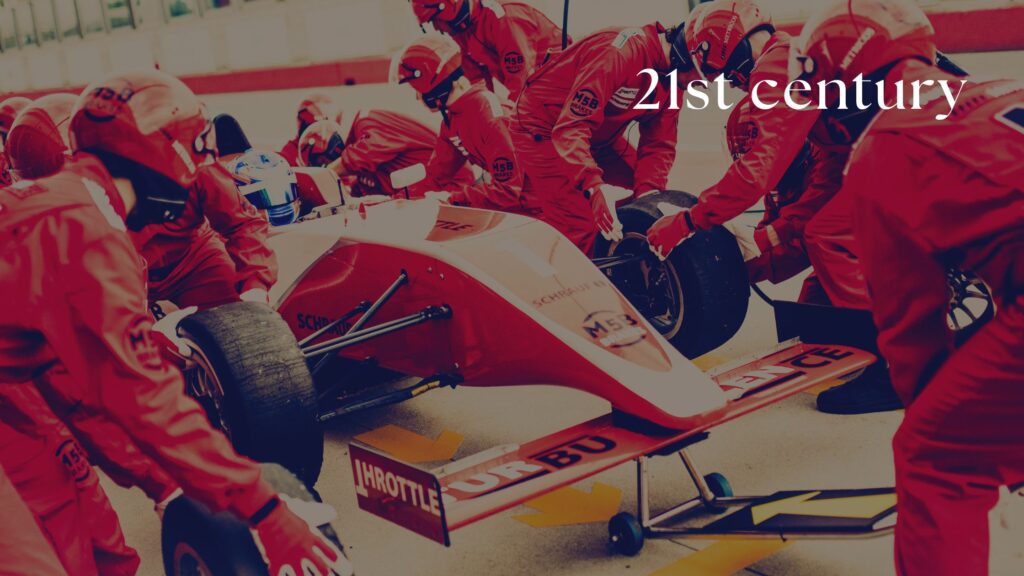
Formula 1 closes this arc in a particularly interesting way, because here the movement that matters most is not the guests’ movement at all — it is the cars’. The Paddock Club and similar premium hospitality programs sell proximity to motion: trackside views, pit lane walks, garage access, the physical sensation of speed happening close enough to feel it. Guests travel considerable distances to be near machines in motion, and the corporate hospitality packages built around Grand Prix weekends across cities like Monaco, Las Vegas, and Abu Dhabi now function as complete incentive products in themselves — accommodation, access, and experience bundled around velocity as the central attraction.
In this sense, Formula 1 hospitality represents something genuinely new in the history traced here: a format where the experience of movement, observed rather than undertaken, becomes powerful enough to justify an entire program built around it. The carriage made arrival theatrical. The Orient Express made the journey the destination. Formula 1 makes velocity itself the reward.
What this history of event mobility is worth to a planner today
None of this argues for replacing shuttle buses with carriages, or chartering trains for every incentive group. Rather, it argues for a different question at the design stage. Instead of asking only how a group gets from the airport to the hotel, it is worth asking what that hour in transit could communicate, build, or set in motion emotionally before the program officially begins. Sometimes the honest answer is that a comfortable, efficient transfer is exactly right — not every moment needs theater. But occasionally, the journey itself is the most underused asset in the entire program, sitting quietly between two locations while planners pour their creative energy into what happens once everyone has arrived.
The carriage, the railway car, the charter flight, and the Paddock Club all made the same wager in their own era: that movement, designed deliberately, becomes memory in a way that arrival alone rarely does. Worth considering, the next time a transfer schedule lands on the desk as just another line item.
Sources: History of Transport, Britannica. The Tourism Institute — Evolution of Business Travel. Formula 1 Official Hospitality, F1 Experiences.